

For patients suffering from severe spinal discomfort, selecting the appropriate interventional procedure depends on the specific origin of the pain. If you experience radiating leg discomfort due to a herniated disc, a targeted epidural steroid injection is the most effective choice. For localized, mechanical spinal aching that worsens when bending backward, a facet joint injection or medial branch block is highly recommended. These targeted steroid injections in back structures deliver powerful anti-inflammatory agents directly to the source of nerve irritation. While these procedures do not correct structural abnormalities, they successfully break the cycle of chronic inflammation. This relief allows patients to resume active rehabilitation and avoid invasive spine surgery. Clinical guidelines recommend considering interventional treatments when first-line therapies fail to provide relief after six weeks. Consulting a specialist ensures an accurate diagnosis and a highly personalized treatment plan.
Disclaimer: The information provided in this article is for educational purposes only and does not substitute for professional medical advice, diagnosis, or treatment. Always consult a qualified healthcare provider, such as a board-certified pain specialist, to discuss your specific symptoms and treatment options.
Understanding the Types of Steroid Injections for Back Pain
Clinicians utilize several distinct types of steroid injections for back pain depending on the patient’s anatomical pathology. Standard oral medications distribute systemic anti-inflammatory agents throughout the entire body. In contrast, local injections deliver a highly concentrated dose of corticosteroids directly to the compromised spinal structure. This localized approach maximizes therapeutic efficacy while minimizing systemic side effects.
The primary categories of spinal injections include the following:
- Epidural Steroid Injections (ESIs): Physicians deliver these injections into the epidural space, which is the fat-filled area surrounding the spinal cord and nerve roots. ESIs are highly effective for treating radicular pain, commonly known as sciatica, which radiates down the buttocks and legs.
- Facet Joint Injections: These injections target the small joints located between each vertebra. Facet joints facilitate spinal flexibility and stability. Degeneration or arthritis in these joints causes localized stiffness and aching, which these injections relieve.
- Sacroiliac (SI) Joint Injections: The SI joints connect the lower spine to the pelvis. Inflammation in this region causes severe lower back and buttock pain. Precise placement of corticosteroids within this joint space can alleviate localized sacroiliitis.
- Trigger Point Injections: While not directed into the spinal column, these injections target painful, knotted muscle bands in the paraspinal muscles. They help relieve myofascial pain that often accompanies structural spinal conditions.
A study published by the Cochrane Database of Systematic Reviews confirms that epidural steroid injections offer significant short-term pain reduction. This therapeutic window allows patients to participate actively in physical therapy programs. Identifying the exact source of pain through diagnostic imaging is essential before selecting any of these specialized interventions.
Anatomical Targets and How a Steroid Injection in Back Structures Works
The human spine is a complex network of vertebrae, intervertebral discs, nerves, and supporting ligaments. When a disc herniates or the spinal canal narrows due to stenosis, neighboring nerve roots undergo mechanical compression. This physical pressure triggers a powerful chemical inflammatory cascade. The body releases inflammatory enzymes, such as phospholipase A2, which irritate the nerve membrane and cause severe pain signals to travel to the brain.
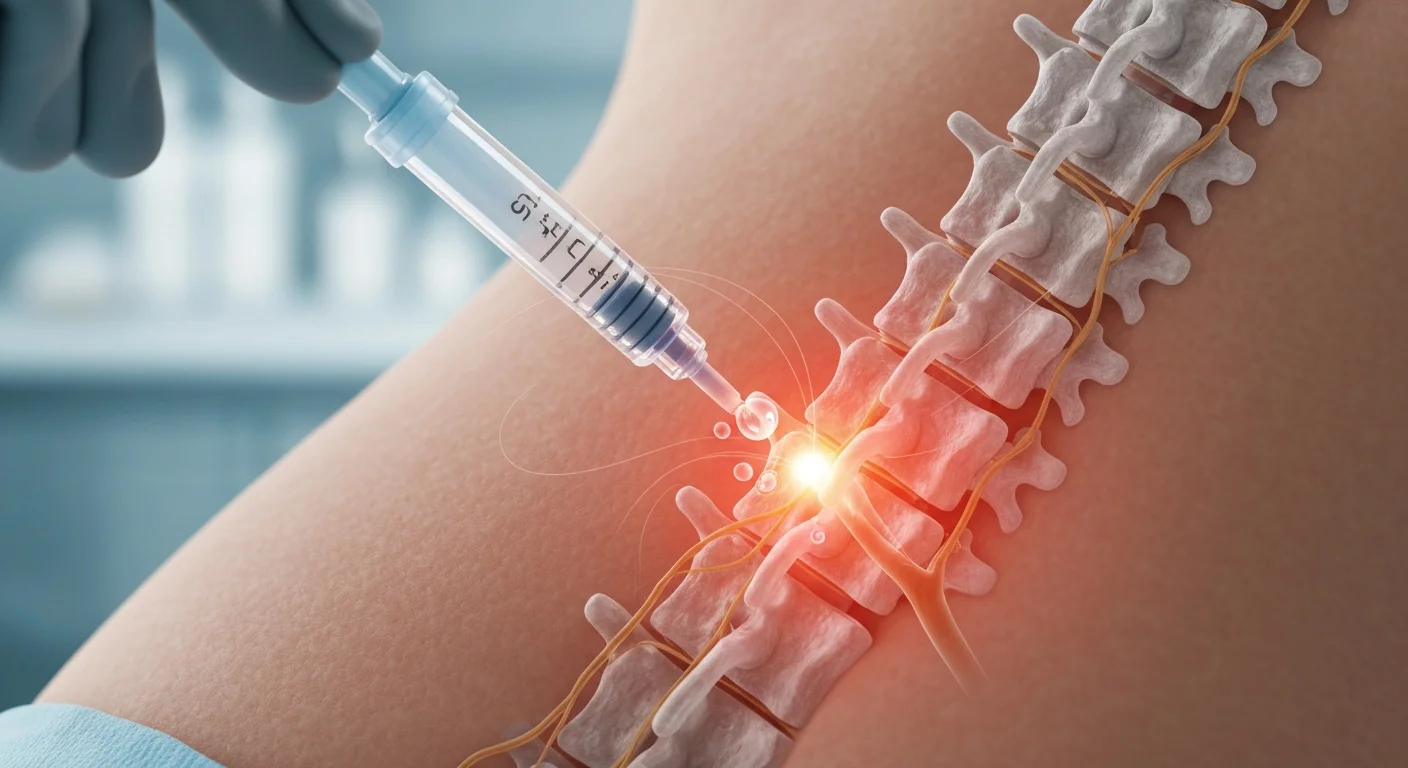
A steroid injection in back tissues interrupts this cycle using a dual-action mechanism:
- Inhibition of the Inflammatory Cascade: Corticosteroids block the synthesis of arachidonic acid, preventing the production of prostaglandins and leukotrienes. This chemical blockade halts active inflammation in its tracks.
- Membrane Stabilization: The steroid medication stabilizes irritated nerve membranes. This reduces the sensitivity of the nerve fibers and limits their ability to transmit repetitive pain signals.
- Mechanical Flushing: The liquid volume of the injection, which often contains a local anesthetic like lidocaine or bupivacaine, physically flushes out inflammatory proteins and cytokines from around the affected nerve root.
By administering steroid injections in back areas under precise fluoroscopic guidance, pain specialists ensure the medication reaches the exact micro-environment of the compressed nerve. This targeted delivery achieves a therapeutic concentration that oral medications cannot safely match. Patients suffering from chronic conditions like degenerative disc disease or spinal stenosis find that this localized reduction in swelling restores vital space within the spinal canal.
The Pros and Cons of Steroid Injections for Back Pain

Evaluating the pros and cons of steroid injections for back pain is essential for patients considering interventional care. Like any medical procedure, spinal injections carry distinct advantages and clinical limitations. Patients must weigh these factors alongside their treating physician to make an informed decision.
The Advantages of Spinal Steroid Therapy
The primary benefit of steroid back injections is rapid, localized relief. Patients often experience a dramatic reduction in pain within three to seven days of the procedure. This pain relief helps patients break the cycle of chronic discomfort and avoid oral opioid prescriptions. Furthermore, these injections serve as an excellent diagnostic tool. If a patient experiences immediate relief from a selective nerve block, it confirms the exact source of their pain. This diagnostic clarity is invaluable if future surgical interventions become necessary.
The Limitations and Drawbacks
The primary limitation is that corticosteroids provide temporary relief rather than a permanent cure. While some patients enjoy pain-free intervals lasting several months or years, others may require repeat injections. Additionally, repetitive exposure to corticosteroids can lead to localized tissue softening, cartilage degeneration, or systemic bone density loss. To mitigate these risks, clinical guidelines generally limit patients to a maximum of three to four injections within a single calendar year.
An expert clinical recommendation to avoid a common professional mistake is to never treat steroid injections as a standalone therapy. Many practitioners fail to pair the injection with structured rehabilitation. The primary purpose of a steroid injection is to create a pain-free window. Patients must utilize this period to perform targeted physical therapy. Strengthening the core and lumbar stabilizer muscles during this time is the only way to achieve long-term spinal stability and prevent recurrent pain episodes.
Recognizing the Potential Side Effects of Steroid Injection in Back Tissue
Every invasive spinal procedure carries a profile of potential risks and adverse reactions. While serious complications are rare, patients must monitor their physical response closely after receiving treatment. Understanding the distinction between expected post-injection reactions and actual complications is critical for patient safety.
Common, self-limiting side effects of steroid injection in back muscles or joint spaces include:
- Steroid Flush: Patients may experience transient warmth and redness in the face, neck, or chest, lasting up to 48 hours.
- Localized Pain Flare: A temporary increase in soreness at the injection site is common as the local anesthetic wears off and the steroid crystals begin to take effect.
- Transient Blood Glucose Elevation: Corticosteroids can cause a temporary spike in blood sugar levels. Diabetic patients must monitor their glucose closely for several days following the procedure.
- Insomnia and Mild Anxiety: Some patients experience temporary restlessness, mood fluctuations, or difficulty sleeping immediately after receiving the injection.
Severe complications occur in less than 1% of cases when performed by an experienced specialist using fluoroscopy. These rare risks include epidural abscess, localized infection, dural puncture headaches, and nerve injury. A dural puncture, often called a “wet tap,” occurs if the needle accidentally penetrates the protective spinal membrane, causing cerebrospinal fluid to leak. This issue presents as a severe headache that worsens when standing and improves when lying flat. Pain specialists can easily treat this condition using an autologous blood patch.
Data compiled by the National Center for Biotechnology Information indicates that utilizing real-time fluoroscopic imaging reduces major complication rates to negligible levels. Patients must immediately seek medical attention if they experience severe back pain, progressive leg weakness, loss of bowel or bladder control, or a fever exceeding 100.4 degrees Fahrenheit.
What to Expect During and After a Back Steroid Injection Procedure
Understanding the steps of a back steroid injection helps reduce patient anxiety and ensures a smooth clinical experience. The entire outpatient procedure typically takes between 15 and 30 minutes, followed by a short observation period.
The step-by-step clinical protocol includes the following stages:
- Preparation: The patient lies prone on a specialized fluoroscopy table. The clinical team monitors vital signs, and the physician cleanses the target skin area with an antiseptic solution.
- Local Anesthetic: The physician injects a small amount of local anesthetic to numb the skin and deeper tissues, minimizing discomfort during the procedure.
- Fluoroscopic Guidance: Using real-time X-ray imaging, the physician carefully guides a thin needle to the precise anatomical target, such as the epidural space or facet joint.
- Contrast Injection: A small amount of contrast dye is injected to confirm that the needle is positioned correctly and that the medication will flow safely around the target structures.
- Medication Delivery: The physician slowly injects the mixture of corticosteroid and local anesthetic. Patients may feel a transient sensation of pressure or mild replication of their typical pain during this step.
After a brief 20-minute recovery period, patients are discharged home. Due to the temporary numbing effects of the local anesthetic, patients must arrange for a driver to take them home. Most individuals can resume light daily activities the following day, though they should avoid strenuous exercise, hot tubs, and baths for 48 hours.
Financial costs for these procedures vary based on insurance coverage, geographic location, and whether the injection is performed in an office setting or an ambulatory surgical center. On average, a lumbar epidural injection ranges from $600 to $2,500. Most commercial insurance plans and Medicare provide coverage for these injections when patients document prior conservative treatments, such as physical therapy, that failed to resolve their symptoms.
Comparing Interventional Spinal Injections
When seeking back pain relief, patients and clinicians must choose the specific interventional technique that aligns with the diagnosed spinal pathology. The table below outlines the key differences between the most common interventional spinal injections performed in clinical practice.
| Injection Type | Primary Anatomical Target | Common Indications | Typical Relief Duration | Average Out-of-Pocket Cost Range |
|---|---|---|---|---|
| Epidural Steroid Injection | Epidural space surrounding spinal nerves | Sciatica, herniated discs, spinal stenosis | 3 to 6 months | $800 – $2,500 |
| Facet Joint Injection | Facet joints of the vertebral column | Facet arthropathy, spinal osteoarthritis | 1 to 3 months | $600 – $1,800 |
| Sacroiliac (SI) Joint Injection | Sacroiliac joint cavity | Sacroiliitis, pelvic girdle instability | 2 to 4 months | $700 – $2,000 |
| Trigger Point Injection | Myofascial taut bands (muscle tissue) | Muscle spasms, myofascial pain syndrome | 2 to 6 weeks | $150 – $400 |
This comparative data highlights the importance of an accurate clinical diagnosis. For instance, receiving an epidural injection for isolated, muscular spasms is clinically inappropriate and will not yield lasting relief. According to clinical consensus statements from the North American Spine Society, matching the injection type to the patient’s specific spinal imaging findings is the single most critical factor in predicting a successful long-term outcome.
FAQ
What is the success rate of steroid injections for back pain?
Success rates depend heavily on the underlying condition. For patients with acute herniated discs and radiating leg pain, epidural steroid injections provide significant pain relief in approximately 70% to 80% of cases. However, patients with chronic degenerative conditions like severe spinal stenosis may experience lower success rates or shorter durations of pain relief.
How long does it take for a back steroid injection to start working?
While the local anesthetic in the injection may provide immediate relief for the first few hours, this effect wears off quickly. The corticosteroid component typically takes between three to seven days to reduce inflammation and provide noticeable pain relief. In some cases, patients may not experience the full benefit of the injection for up to two weeks.
Is a steroid injection in back structures painful to receive?
Most patients experience only mild discomfort during the procedure. Pain specialists use a local anesthetic to thoroughly numb the skin and path of the needle before inserting the treatment needle. Patients often describe a sensation of pressure or a brief, mild replication of their typical nerve pain as the medication is administered.
How many steroid back injections can you safely have in a year?
Most pain specialists limit patients to a maximum of three to four steroid injections within a 12-month period. Exceeding this limit increases the risk of systemic side effects, such as bone density loss, adrenal suppression, and localized tissue softening. If a patient does not experience significant relief after two consecutive injections, clinicians will re-evaluate the treatment plan.
Can a steroid injection cure a herniated disc?
No, a steroid injection does not physically repair or shrink a herniated disc. Instead, it powerful suppresses the localized chemical inflammation and swelling surrounding the compressed nerve root. This dramatic reduction in inflammation allows the body’s natural healing processes to gradually resorb the herniated material over time while keeping the patient comfortable.
Which is safer: a selective nerve block or a traditional epidural injection?
Both procedures are highly safe when performed under live fluoroscopic guidance by a qualified pain specialist. A selective nerve block targets a single, specific nerve root and uses a smaller volume of medication. A traditional epidural covers a broader area of the spinal canal. Your physician will select the safest and most effective method based on your specific diagnostic imaging.